HZS90 Concrete Batching Plant Installed and Remotely Supported in Uzbekistan
This Uzbekistan project records an HZS90 concrete batching plant installed with remote technical support during the epidemic period. The project used a 90 m3/h stationary batching route with JS1500 mixing, PLD2400 aggregate batching, cement storage, inclined belt feeding, and commissioning guidance for customer-side startup.
Customer Requirement for an HZS90 Plant with Remote Installation Guidance
The Uzbekistan customer needed a stationary concrete batching plant that could be installed and brought into operation even when overseas travel was restricted. The project required a clear equipment route, practical site arrangement, and remote engineering communication so the customer team could complete installation, debugging, and operator preparation with structured guidance from QIC Machinery.

Remote Technical Coordination During the Epidemic
The project could not depend only on conventional on-site engineer attendance. The customer required online guidance that could support installation sequence review, debugging communication, and operation preparation during a restricted travel period.
90 m3/h Concrete Production Route
The customer selected an HZS90 plant to build a medium-capacity batching route. This model was suitable for a project that required higher output than small compact plants while still keeping the configuration manageable for a fixed production yard.
Aggregate Batching and Belt Feeding Layout
The site needed a PLD2400 aggregate batching machine and inclined belt conveyor route to organize aggregate weighing, material transfer, and feeding into the main mixing structure.
Startup Support for Customer Operators
Beyond equipment installation, the customer required communication around debugging, staff training, and technical consulting so the local team could understand daily startup, production checking, and routine operating points.
HZS90 Configuration Used for the Uzbekistan Installation
The Uzbekistan plant was arranged around the standard HZS90 stationary batching route. This HZS90 configuration combines a JS1500 twin-shaft concrete mixer, PLD2400 aggregate batching system, cement storage, conveyor feeding, weighing modules, and computer-based control support, giving your project a complete production route from material preparation to concrete discharge.

Factory Preparation, Container Loading and Remote Installation Guidance
This Uzbekistan HZS90 project includes factory preparation, control cabinet readiness, mixer loading, and remote silo installation guidance records. These images show how the main plant equipment was prepared before shipment and how QIC Machinery supported the customer during the installation stage when on-site service access was limited.

PLD2400 Batching Machine After Painting
The PLD2400 aggregate batching machine was completed with surface painting before shipment preparation. This record shows the aggregate weighing section of the HZS90 plant after factory production and finishing work.

Control Cabinet Prepared for the HZS90 Plant
The control cabinet was prepared as part of the batching plant electrical system. It supports the operation sequence for aggregate batching, weighing signals, mixer running, conveying actions, and production control after site connection.

JS1500 Mixer Loading into Container
The JS1500 twin-shaft concrete mixer was loaded into the container as one of the core units of the HZS90 plant. This loading record helps show the overseas delivery preparation before the equipment was sent to Uzbekistan.

Remote Guidance for Cement Silo Installation
QIC Machinery engineers provided remote guidance while the customer installed the cement silo at the Uzbekistan site. This record reflects the online installation support used for silo positioning, assembly communication, and startup preparation during the project.
Remote Installation and Debugging Support for the Uzbekistan HZS90 Plant
The Uzbekistan project required remote coordination because epidemic restrictions affected normal overseas service routes. QIC Machinery supported the customer through online installation guidance, debugging communication, staff training, and technical consulting, helping the customer team move from equipment assembly to startup preparation.

Installation Sequence Review
The support process needed to help the customer understand the order of plant assembly, including batching machine placement, belt conveyor alignment, mixer structure connection, cement silo positioning, and control system preparation.
Equipment Debugging Communication
After mechanical installation, the customer required guidance for checking feeding action, mixer operation, weighing response, conveyor movement, discharge route, and other startup-related points.
Operator Training Support
The project support also covered staff training communication so the local team could understand basic operation flow, production sequence, inspection points, and routine operating precautions.
Technical Consulting During Startup
Remote technical consulting helped the customer handle questions during installation and early use, especially when site teams needed clarification without waiting for direct engineer arrival.
Project Result and Practical Reference Value
The Uzbekistan HZS90 project shows how a medium-capacity stationary batching plant can be installed and debugged with remote support when overseas service conditions are limited. For similar buyers, this case is useful for reviewing equipment configuration, site layout, online guidance, and startup preparation for a 90 m3/h concrete production system.
HZS90 Plant Installed at the Customer Site
The project reached the installation stage in Uzbekistan, with the completed site layout showing the cement silo system, belt conveyor route, aggregate batching section, and main batching plant structure.
Remote Guidance Used Instead of Waiting for Travel Recovery
Because the epidemic affected engineer mobility, QIC Machinery used online support to guide the customer through installation and debugging communication, reducing dependence on delayed overseas travel.
Medium-Capacity Production Route Established
The JS1500 mixer and PLD2400 batching system created a practical HZS90 production route for customers who need higher output than compact plants but do not require a larger HZS120 or HZS180 setup.
Useful Reference for Similar Overseas Projects
This case can support buyers who need a stationary concrete batching plant with clear installation guidance, remote communication, and practical startup support for overseas construction supply work.
Related Equipment for HZS90 Concrete Batching Plant Projects
The Uzbekistan case involved a fixed HZS90 batching route with aggregate batching, twin-shaft mixing, cement storage, belt feeding, weighing, and control support. These related equipment pages help buyers compare the main systems before planning a similar project.

Stationary Concrete Batching Plant
A stationary concrete batching plant is built for long-term concrete production at a fixed site. It uses aggregate batching, cement silo feeding, twin-shaft mixing, water and additive dosing, and PLC control to support ready-mix supply, precast yards, road projects, bridge work, and infrastructure construction where stable output and fixed-site planning matter more than relocation speed.
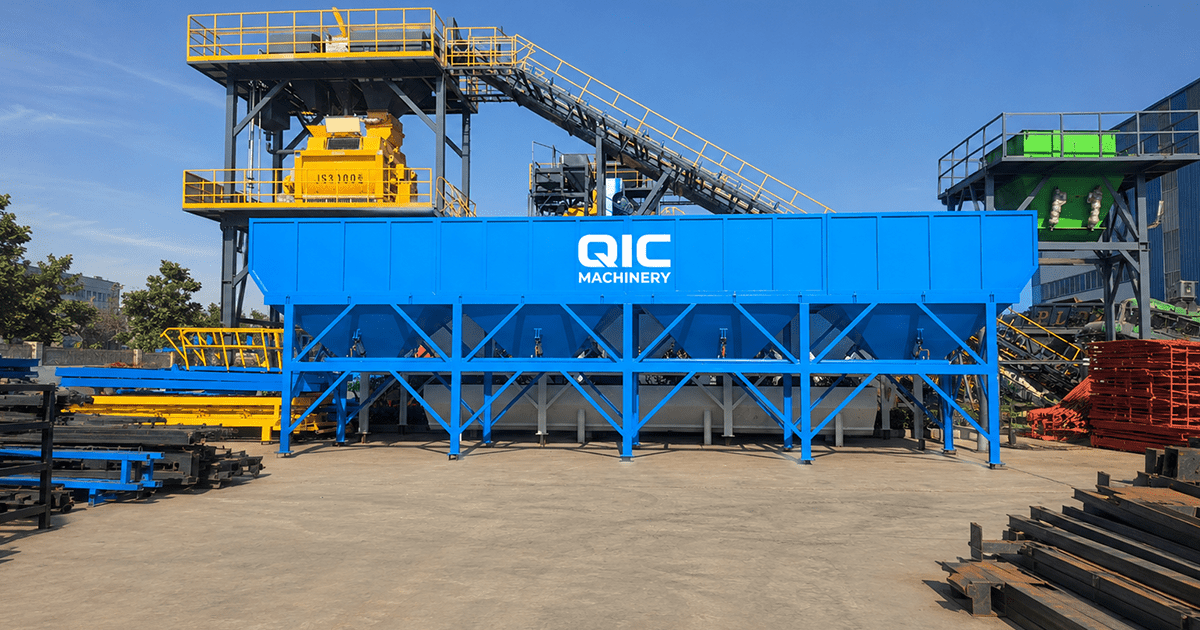
Aggregate Batching Machine
An aggregate batching machine stores, weighs, and feeds sand and stone before the materials enter the concrete mixer. It helps a concrete batching plant keep aggregate proportion accuracy, stable recipe control, and continuous feeding for ready-mix, precast, road, bridge, and jobsite concrete production.
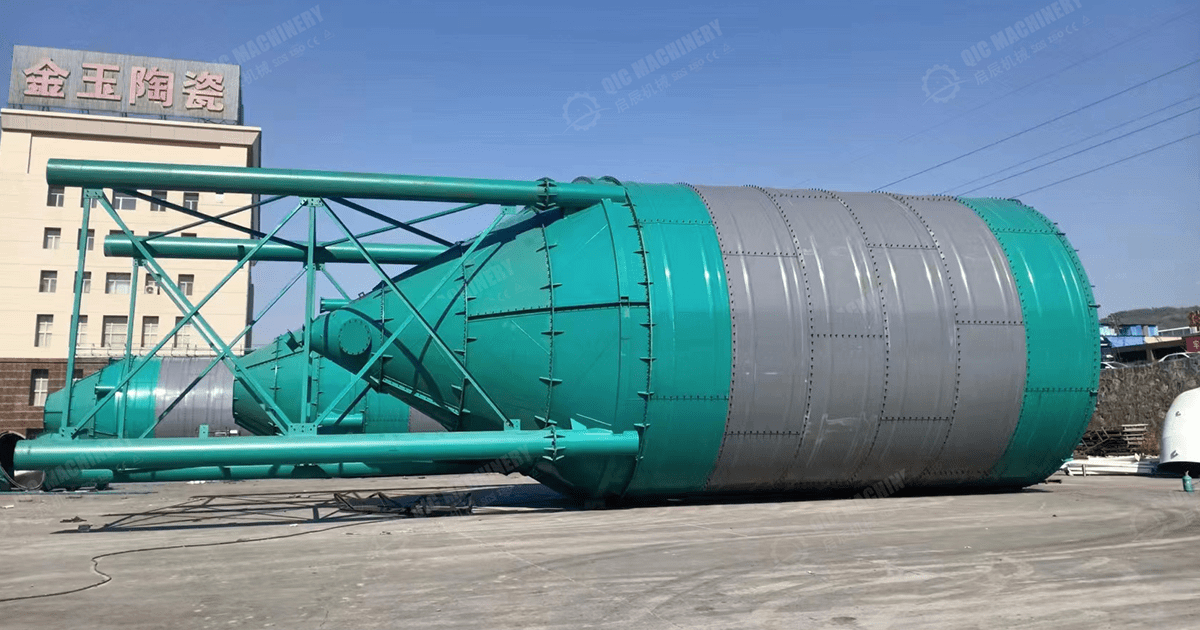
Cement Silo
A cement silo stores cement, fly ash, mineral powder, or other bulk powder materials for concrete batching plants, dry mortar plants, and industrial material handling systems. You can select bolted or welded silo configurations according to storage capacity, shipping method, site height, powder type, discharge system, and dust collection requirement.
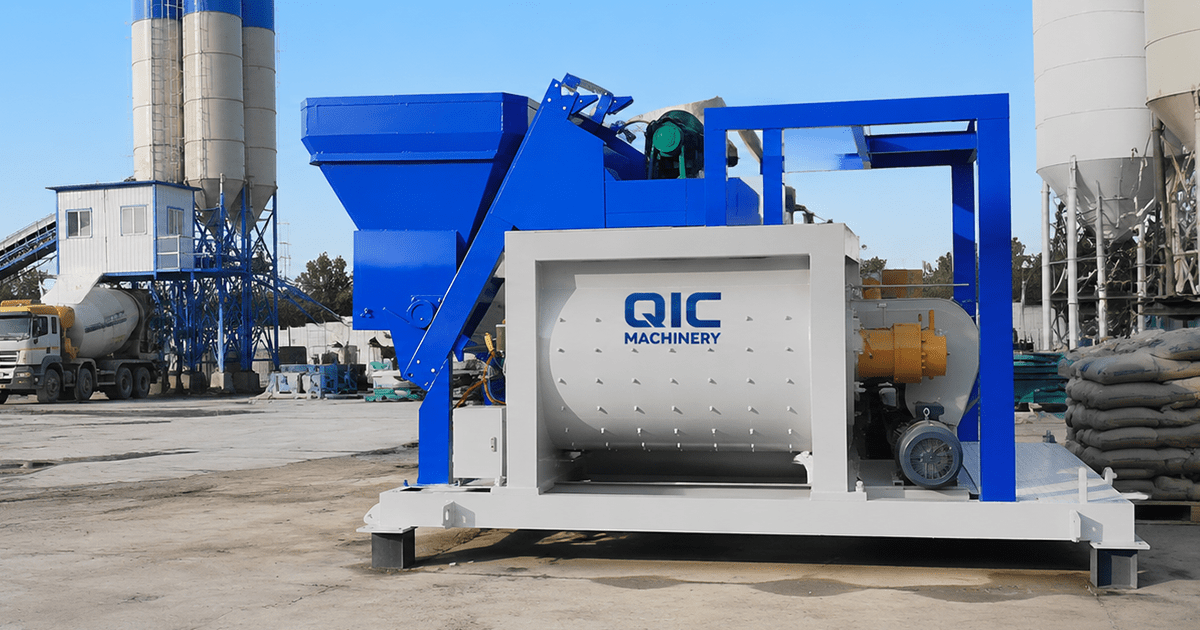
Concrete Mixer
QIC Machinery concrete mixers are used as standalone mixing equipment or as the core mixing unit in concrete batching plants, precast production lines, and compact jobsite systems. You can select twin-shaft, planetary, pan, or drum mixer configurations according to your concrete type, batch volume, aggregate size, mixing intensity, and production cycle.
Related Concrete Batching Plant Project Cases
Review more QIC Machinery project cases involving stationary batching plants, overseas installation, site startup support, and concrete production configuration planning.

HZS90 Concrete Batching Plant Installed for Local Concrete Supply in South Africa
QIC Machinery supplied an HZS90 concrete batching plant for a local concrete supply project in South Africa, with factory production records, overseas delivery preparation, installation support, and site startup guidance.

HZS90 Concrete Batching Plant Installed and Commissioned in Sri Lanka
QIC Machinery supplied and supported an HZS90 concrete batching plant project in Sri Lanka, with a 90 m3/h configuration, JS1500 mixer, PLD2400 aggregate batching system, cement storage, screw conveyors, and installation commissioning record.

HZS35 Concrete Batching Plant for Local Concrete Production in Canada
QIC Machinery supplied an HZS35 concrete batching plant for local concrete production in Canada, with factory preparation, container delivery, installation guidance, and startup preparation records.
FAQ About the HZS90 Concrete Batching Plant Case in Uzbekistan
These questions focus on the selection, installation, remote support, configuration, and startup information that overseas customers commonly ask before planning a similar HZS90 concrete batching plant project.
Why was the HZS90 model suitable for the Uzbekistan project?
The HZS90 model was suitable because the project required a medium-capacity stationary batching route. Its 90 m3/h capacity, JS1500 mixer, and PLD2400 batching system fit customers who need organized production beyond a small compact plant.
What main equipment was confirmed in this case?
The confirmed core equipment included the JS1500 twin-shaft concrete mixer and PLD2400 aggregate batching system. The site image also shows cement silo storage, inclined belt feeding, and the installed plant structure.
How did QIC Machinery support installation when on-site service access was limited?
QIC Machinery provided online installation guidance, startup support, operator communication, and technical consultation for this Uzbekistan HZS90 project. This support helped your project team review the installation sequence, check key equipment actions, understand the control process, and prepare the plant for site operation under limited service access conditions.
What should the customer prepare before installing an HZS90 plant?
The customer should prepare the foundation area, aggregate loading route, cement silo position, belt conveyor direction, mixer truck access, power supply, drainage route, lifting equipment, and enough maintenance space around the plant.
Can remote guidance replace all on-site installation work?
Remote guidance can help the customer review installation sequence, equipment checking, debugging steps, and startup questions. However, local installation labor, lifting tools, foundation preparation, electrical connection, and safety execution still need to be arranged at the project site.
What information should be provided before requesting a similar HZS90 configuration?
Please provide your country, required concrete output, site size, aggregate source, cement storage plan, power supply, mixer truck loading route, delivery schedule, and whether your project requires on-site or remote installation support.
Plan Your HZS90 Concrete Batching Plant Project
Tell us your country, project type, required capacity, site condition, aggregate source, cement storage plan, power supply, installation method, and expected delivery schedule.
