What Does Concrete Mixer Pump Capacity Mean?
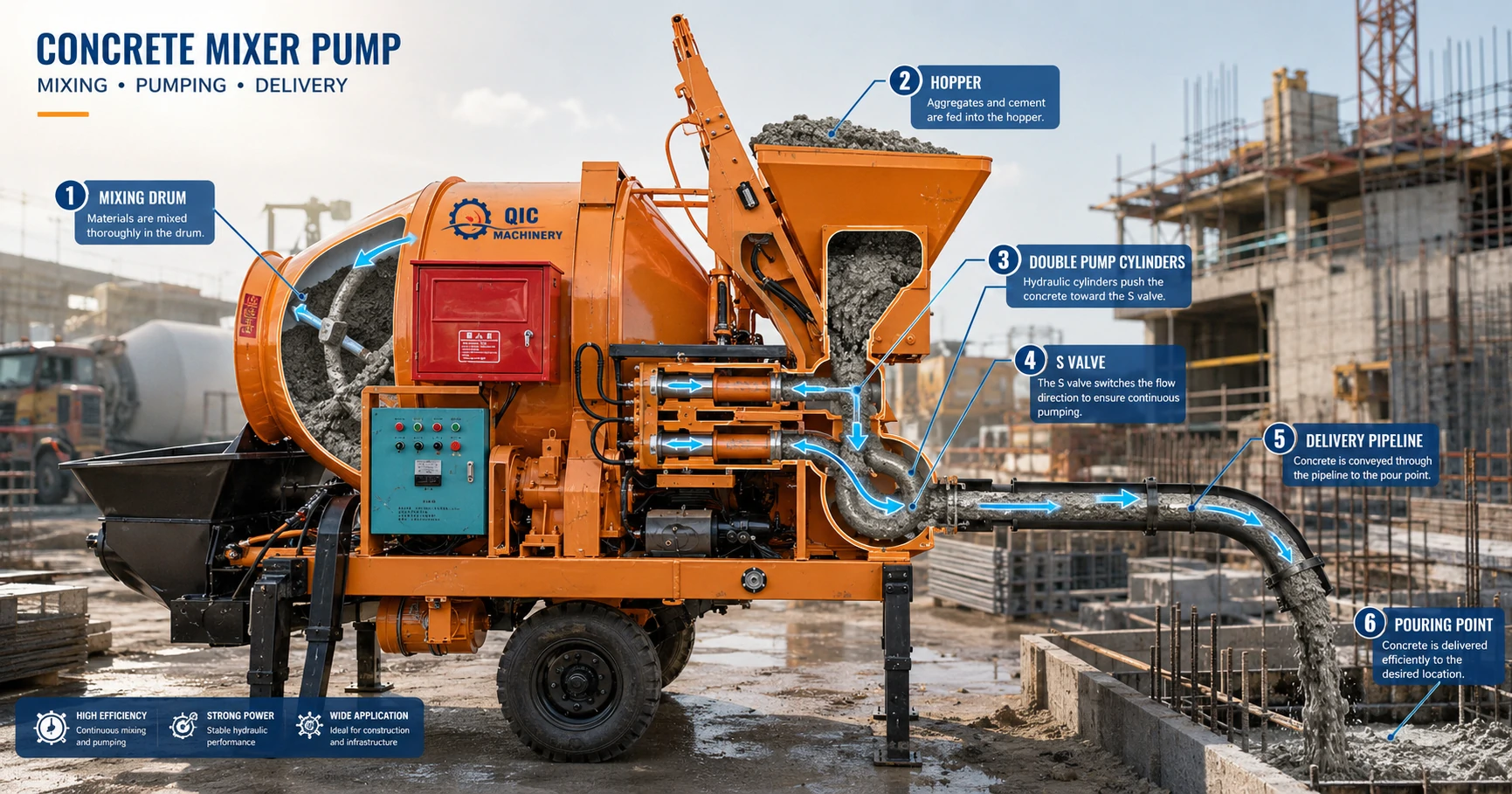
Concrete mixer pump capacity usually refers to the maximum output of the pumping circuit, measured in cubic meters per hour. However, actual placed concrete per hour depends on mixer cycle, loading method, hopper feeding, pipeline layout, vertical rise, concrete consistency, and placing speed.
Quick Selection Table: Which Concrete Mixer Pump Capacity Fits Your Project?
The 10, 30 and 40 m³/h ratings should be compared with your actual working cycle, not only with the maximum pump output. Use the table below as a quick starting point before confirming the final model with your loading method, mixer cycle, pipeline layout and site placing speed.
| Project Condition | Suggested Capacity Direction | Why This Direction May Fit | What To Confirm Before Quotation |
|---|---|---|---|
| Small placement volume, narrow site access, slower manual loading or limited placing speed | 10 m³/h concrete mixer pump | The compact model can match a modest sustained pour rate without adding unused pumping capacity. | Placement volume, loading method, access width, pipeline length and actual working hours. |
| Medium building work, stable feeding rhythm, moderate pipeline and regular site placement | 30 m³/h concrete mixer pump | The 30 m³/h class is often a practical starting point when the site needs more output than the 10 m³/h model can support. | Concrete mix, mixer cycle, hopper feeding rhythm, horizontal distance, vertical rise and power condition. |
| Higher sustained pour requirement, faster loading process, suitable pipeline layout and enough placing manpower | 40 m³/h concrete mixer pump | The 40 m³/h class can shorten the working window only when mixing, feeding, pumping and placing can all keep pace. | Required sustained rate, batch cycle, aggregate size, pipe bends, hose length and placing team capacity. |
| No stable industrial electricity supply or project site changes frequently | Diesel concrete mixer pump | Diesel power reduces dependence on site electricity and can be easier to arrange for temporary or remote work. | Daily working hours, fuel availability, maintenance plan and local emission or site rules. |
| Fixed site with suitable voltage, transformer capacity, cable distance and grounding condition | Electric concrete mixer pump | Electric power can suit planned sites where the power supply is stable and the working position is relatively fixed. | Voltage, frequency, transformer capacity, cable distance, grounding and site electrical safety conditions. |
This table is a selection reference only. The final model should be confirmed after checking the required concrete volume, effective working time, loading method, mixer cycle, pipeline route, vertical rise, concrete consistency and placing conditions.
Concrete Mixer Pump Capacity Range: 10, 30 and 40 m³/h
You can choose a 10, 30 or 40 m³/h diesel concrete mixer pump, or a 30 or 40 m³/h electric model. The five current options are listed below so the capacity discussion starts with an actual machine rather than a broad industry range.
| Power | Model | Maximum pump output | Maximum pressure | Hopper | Max. Aggregate Diameter(mm) | Maximum vertical / horizontal distance |
|---|---|---|---|---|---|---|
| Diesel | JZB200-10R | 10 m³/h | 10 MPa | 500 L | Crushed stone: 20 | 100 / 400 m |
| Diesel | JBT30-10-56R | 30 m³/h | 10 MPa | 450 L | Pebble: 40 Gravel: 35 | 120 / 300 m |
| Diesel | JBT40-11-82R | 40 m³/h | 11 MPa | 550 L | Pebble: 50 Gravel: 40 | 120 / 500 m |
| Electric | JBT30-6 | 30 m³/h | 6 MPa | 450 L | Pebble: 35 Gravel: 40 | 120 / 300 m |
| Electric | JBT40-11 | 40 m³/h | 11 MPa | 450 L | Pebble: 35 Gravel: 40 | 80 / 250 m |
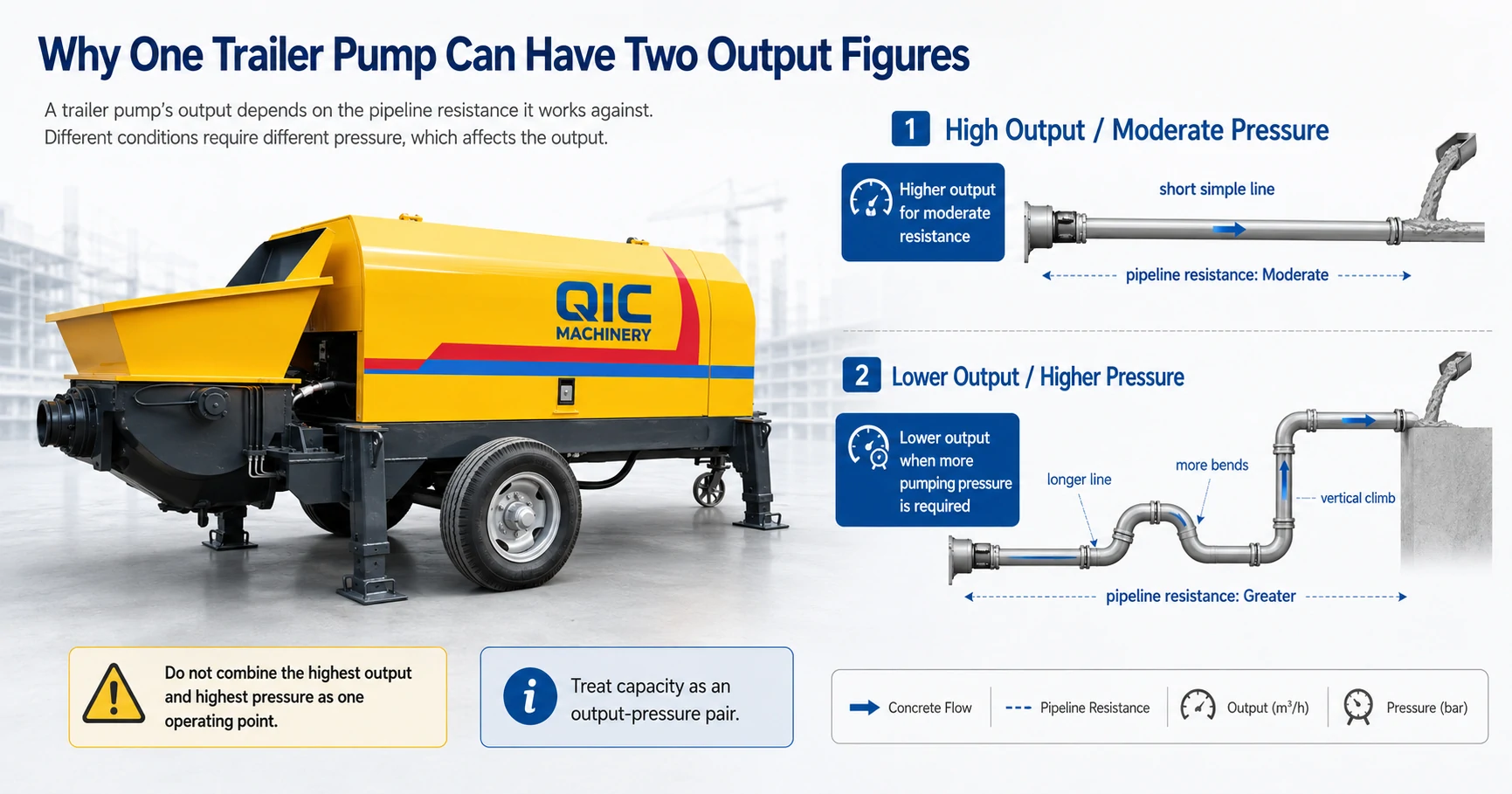
The distance entries are model limits, not guaranteed simultaneous results at maximum output. Pipe diameter, vertical rise, bends, hose, concrete consistency and aggregate grading change the pressure duty and the output available at the placing point.
When Should Your Project Choose a 10 m³/h Concrete Mixer Pump?
The 10 m³/h JZB200-10R is the compact option for a modest required pour rate, restricted access or a loading process built around smaller repeated batches. Its listed data includes a 500 L hopper, 10 MPa maximum pressure and a 0.3/0.2 m³ mixing-drum entry.

A larger pumping circuit may add little when materials are loaded manually or the placing point accepts concrete slowly. In that situation, the compact machine can keep the equipment choice closer to the rate the rest of the site can sustain.
When Should Your Project Choose a 30 m³/h Concrete Mixer Pump?
Move to the 30 m³/h class when the required sustained rate is clearly above the 10 m³/h ceiling and the site can keep the mixer and hopper supplied. You can choose the diesel JBT30-10-56R or electric JBT30-6 according to the available power system.

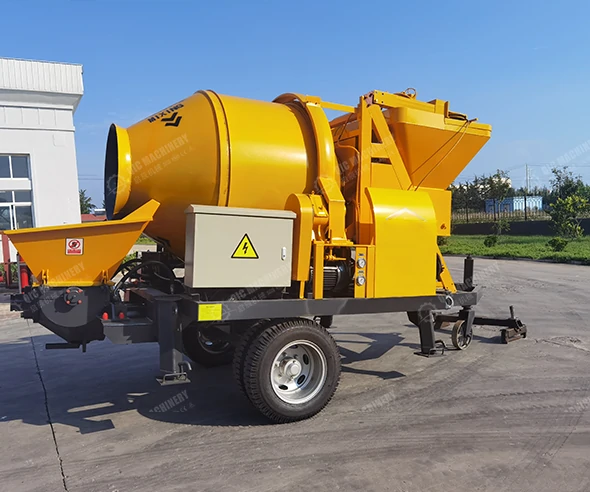
Diesel avoids dependence on a site power connection. Electric operation can suit a fixed working area with a suitable industrial supply. This choice changes how the machine is powered, but neither version can sustain 30 m³/h if batch preparation or material loading repeatedly falls behind.
When Should Your Project Choose a 40 m³/h Concrete Mixer Pump?
The 40 m³/h class is our highest concrete mixer pump output and can reduce the working window only when the mixer, loading method, hopper transfer, pipeline and placing team can maintain the faster cycle. Diesel JBT40-11-82R and electric JBT40-11 provide the same headline output with different pressure, hopper, distance and power data.
If the mixer prepares concrete more slowly than the pumping circuit can move it, the pump will wait for the next batch. In that case, selecting 40 m³/h instead of 30 m³/h adds unused pumping capacity rather than additional concrete at the form.

1. Load
Aggregate, cement, water and admixture must reach the mixer at a repeatable pace.
2. Mix
Usable batch volume and cycle time determine how much fresh concrete is prepared.
3. Feed and pump
The hopper receives each batch before the pumping circuit moves it through the line.
4. Place
Formwork access, hose movement and placing pace determine how quickly concrete is accepted.
Pump Output vs Mixer Capacity: What Is the Difference?
Maximum pump output describes the pumping circuit, while mixer capacity describes the concrete prepared in each batch and over repeated cycles. The lower sustained rate becomes the working limit of the integrated machine.
For the JBT30 and JBT40 models, ask us for the batch volume and cycle data tied to the proposed setup. We do not transfer a mixer value from another model or another manufacturer’s machine simply because its model name looks similar.
Use the slower recurring rate
If the mixer prepares 12 m³ in a working hour, a 30 or 40 m³/h pumping circuit cannot turn that supply into 30 or 40 m³ of placed concrete. If the mixer can feed faster but a long rising line creates the greater constraint, the pressure duty and pump curve become the deciding data.
How to Calculate Required Concrete Mixer Pump Capacity
Start with the concrete volume that must be placed continuously and the available working time. Then allow for the recurring periods needed for loading, mixing, hopper transfer, pipe movement and planned pauses.
For example, a pour that needs 24 m³ placed within four effective working hours begins with a sustained requirement of 6 m³/h, before allowing for interruptions and line conditions. That requirement may fit the 10 m³/h class, but the final choice still needs the concrete mix, pipeline and mixer cycle. A higher required sustained rate can move the choice to 30 or 40 m³/h.
You can see the machine arrangement in our factory and equipment videos before discussing the working layout.
What Information Should You Send for a Capacity Recommendation?
Send us the total concrete volume for one placement, available working time, desired hourly rate, loading method, aggregate type and maximum size, concrete consistency, horizontal pipe length, vertical rise, bends, hose length, site access, local power conditions and destination.
For an electric machine, include voltage, frequency, transformer capacity and cable distance. For diesel, include the expected daily working hours and local fuel conditions. We can then narrow the choice to 10, 30 or 40 m³/h and provide the mixer-side and pipe-package data for that model.
Conclusion
Our concrete mixer pump capacity range is 10, 30 and 40 m³/h. Diesel models cover all three output levels, while electric models cover 30 and 40 m³/h; trailer-pump and boom-pump figures are not part of this range.
The suitable capacity is the one your loading, mixing, hopper feeding, pipeline and placing process can sustain. Send those details through our contact us, and we will explain which actual model and mixer data should form the basis of your selection.