What Does a Concrete Mixer Pump Price Include?
A complete concrete mixer pump price can include three layers: the base machine, the equipment needed to place concrete, and the costs of getting that package to work at your site. Some offers include all three; others stop at the machine.
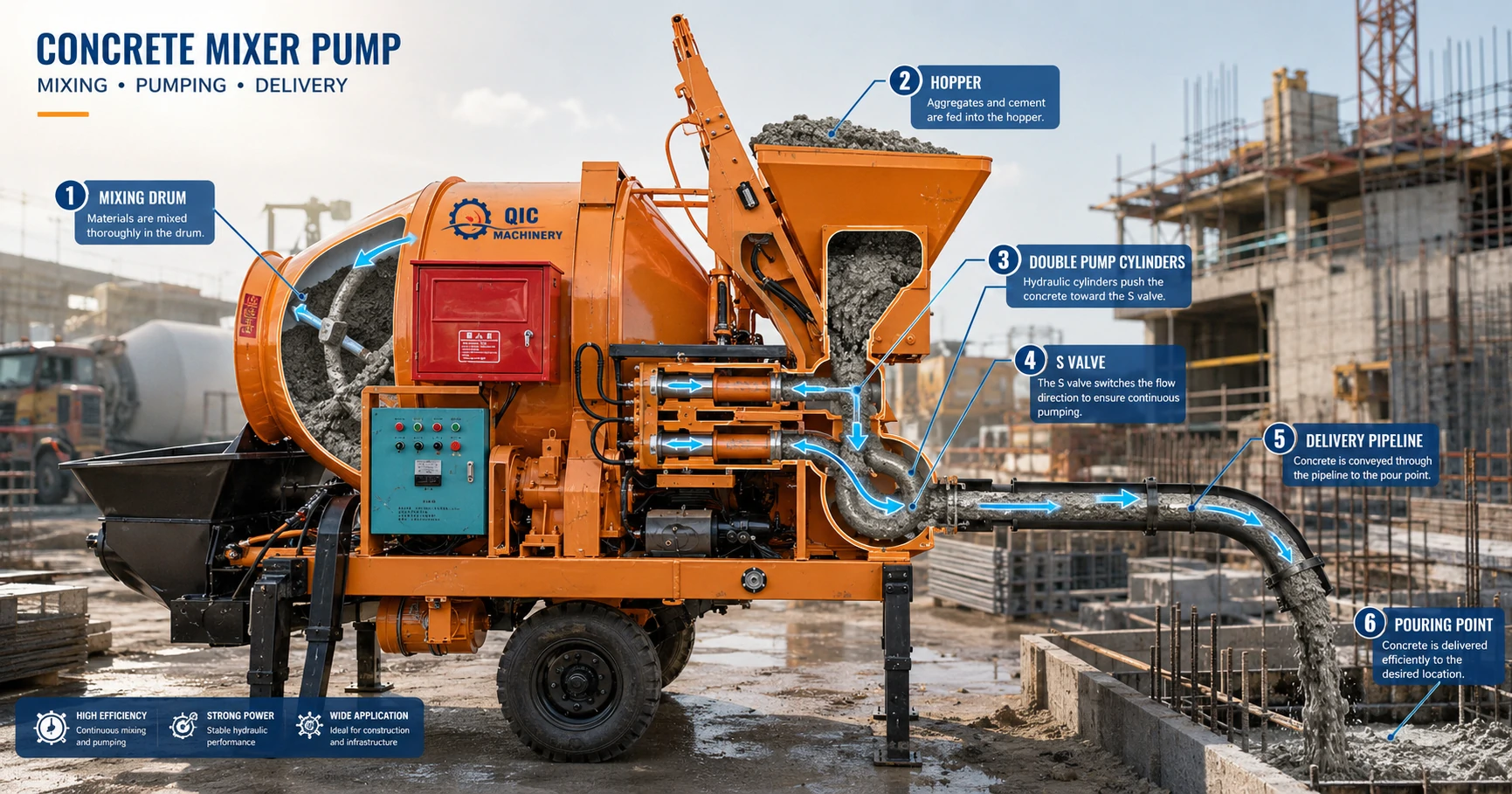
The base machine normally covers the mixer, pumping unit, diesel engine or electric motor, hydraulic system, controls, hopper, S-valve, and chassis. The working package may add delivery pipes, bends, reducers, clamps, seals, an end hose, cleaning tools, initial wear parts, water equipment, or an aggregate batching machine. Packing, inland transport, ocean freight, destination charges, manuals, commissioning, and technician travel belong to a third layer.
There is nothing wrong with quoting these layers separately. The problem begins only when a base-machine price is compared with an offer that already includes pipework, freight, and startup services.

Three Decisions Change the Concrete Mixer Pump Price
The base price changes mainly with the pumping duty, the way concrete is prepared, and the available power. These are engineering decisions, not optional labels on the same machine.
1. Pumping duty
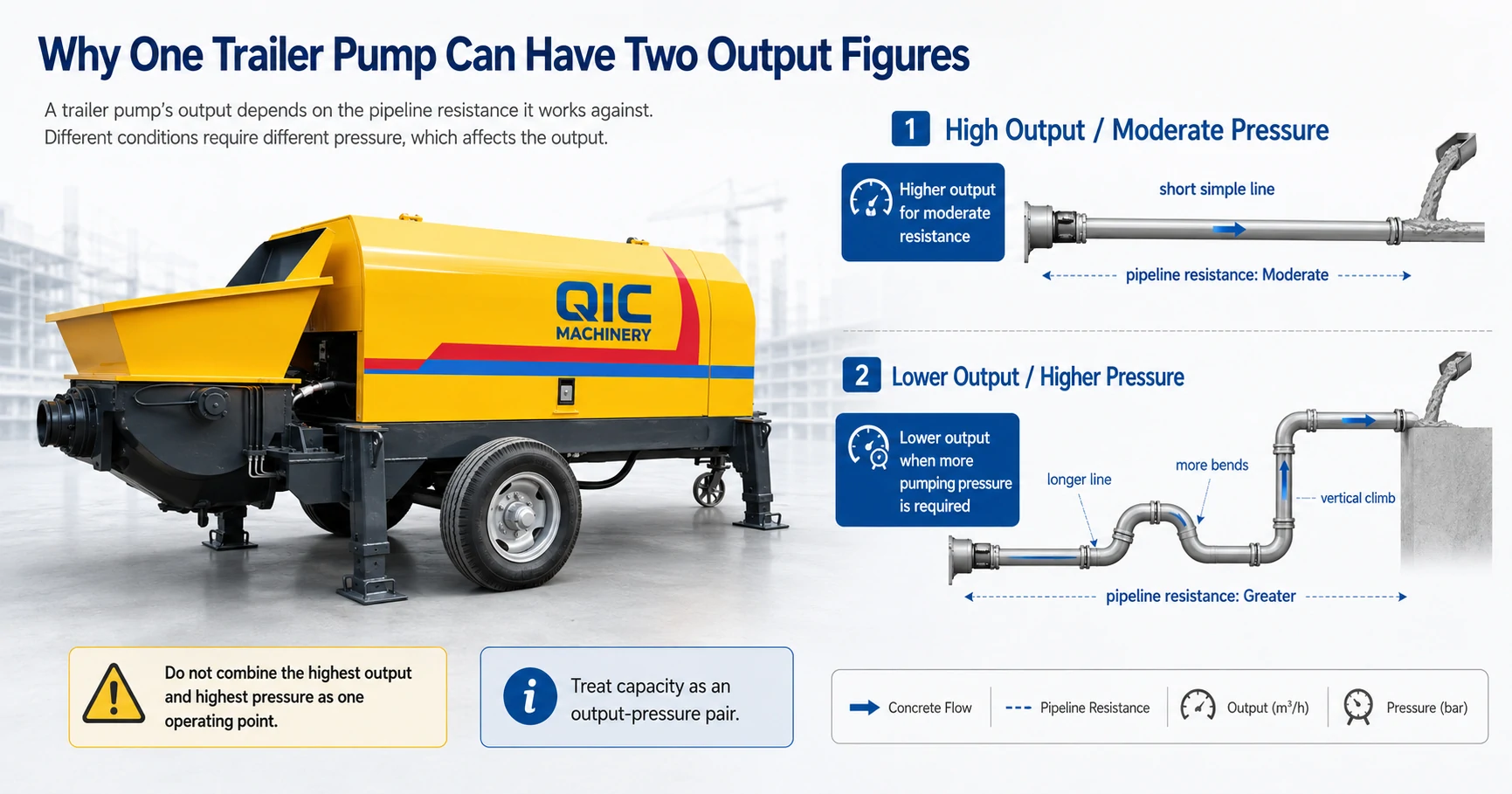
A short horizontal line for a foundation pour may need a compact pumping unit. Add a long vertical rise and several bends, and resistance increases; pressure capacity, pipe diameter, valve condition, and concrete pumpability then matter more than the largest hourly-output figure. Too little pressure margin can slow the pour or increase blockage risk, while unused capacity adds cost without improving the job.
2. Mixing and feeding
Drum and forced-mixing arrangements have different batch sizes, mixing actions, feeding heights, power demands, cleaning work, and wear points. When your mix needs controlled aggregate dosing, the price may also include batching equipment instead of relying on simple manual or volumetric feeding.
3. Diesel or electric power
Diesel provides independent power for remote or changing sites. Electric drive avoids engine fuel and exhaust, but only when voltage, frequency, phase, transformer capacity, cable length, and grounding are suitable. If the grid cannot carry the load and a generator is added later, the original electric-machine price no longer represents the operating setup.
A Lower Price Can Be Genuine—or Incomplete
A lower quotation does not automatically mean lower quality or hidden omissions. It may be lower because the required pressure is modest, industrial power is already available, the pipe run is short, or fewer options are genuinely needed.
The same number becomes misleading when the proposed machine is smaller than the duty, the delivery line is too short, wear parts are absent, or freight and startup work sit outside the offer. The useful question is therefore simple: what changed between the two quotations?
Ask for the exact model, mixer, engine or motor, main hydraulic and electrical components, theoretical output and pressure, pipe quantity, accessories, initial parts, packing method, Incoterm, freight validity, warranty terms, manuals, and startup responsibilities. A price difference should trace back to one or more of those items.

Put Every Quotation on the Same Cost Basis
Place each offer on the same cost basis before comparing totals. This separates machine design from missing equipment, commercial terms, and destination expenses.
| Cost layer | Items to name | Why it changes the comparison |
|---|---|---|
| Base machine | Model, mixer, output, pressure, power source, main components, controls | Shows whether the offers describe the same pumping and mixing duty |
| Concrete placement equipment | Pipe diameter and length, reducers, bends, clamps, seals, end hose | A short or incomplete line creates another purchase before the first pour |
| Initial operating items | Pistons, cutting rings, wear plates, filters, seals, lubrication and cleaning tools | Missing wear items can leave the machine idle while replacements are sourced |
| Site additions | Aggregate batcher, loader, generator, water tank, transformer or cable package | The machine may arrive without a workable feeding, water, or power arrangement |
| Export and freight | Packing, dismantling, inland transport, container plan, Incoterm, named port, insurance | FOB, CIF, and delivered offers do not carry the same logistics cost |
| Destination and startup | Duty, tax, port handling, inland delivery, manuals, commissioning, training, technician travel | These costs and responsibilities appear after shipment if they are not assigned early |
Theoretical Output Is Not the Whole Cost Story
Theoretical pump output describes the pumping mechanism under defined conditions; it does not describe the full mixing-and-placement cycle. Feeding, mixer batch time, hopper continuity, concrete consistency, vertical rise, bends, operator coordination, and cleaning interruptions all affect sustained production.
A larger hydraulic unit therefore adds little value when the mixer cannot keep the hopper supplied. Our guide to how a concrete mixer pump works explains the complete material flow. Before paying for more nominal output, compare the required placement rate with mixer batch volume, feeding method, concrete data, and the complete pipe layout.
Ownership Cost Continues After the Machine Arrives
Fuel or electricity, hydraulic oil, filters, lubrication, pistons, cutting rings, wear plates, pipes, bends, seals, and cleaning supplies continue after delivery. Local parts availability can matter as much as the original component name when one worn seal can interrupt a scheduled pour.
For a remote site, a larger initial wear-parts package may be sensible because urgent air freight is slow and expensive. Where common filters and seals are readily available, carrying the same stock may add unnecessary cost. The location changes the sensible parts list.

What We Need to Prepare a Useful Quotation
We need the concrete duty and pipe layout before we can narrow the machine and price the working package. Send your required hourly and shift volume, concrete application, aggregate type and maximum size, slump range, horizontal pipe length, vertical rise, bend count, end-hose length, power supply, site access, feeding method, destination, and planned startup date.
Our engineers can then identify the mixer, power unit, pumping duty, pipe diameter and quantity, accessories, initial wear parts, packing method, and startup items. We list those lines separately so you can see what the price covers and compare another offer on the same basis.
Conclusion: Price the Machine and the Working Package Separately
A useful concrete mixer pump price tells you two things: what the proposed machine can do and what is included around it. Pumping duty, mixing method, power, pipework, parts, freight, and startup responsibilities should remain visible rather than being compressed into one unexplained total.
Send us the concrete, pipeline, power, access, destination, and schedule details above. We will return a defined model and an itemized working package, giving you a clear basis for the next cost decision. Contact us with those details.