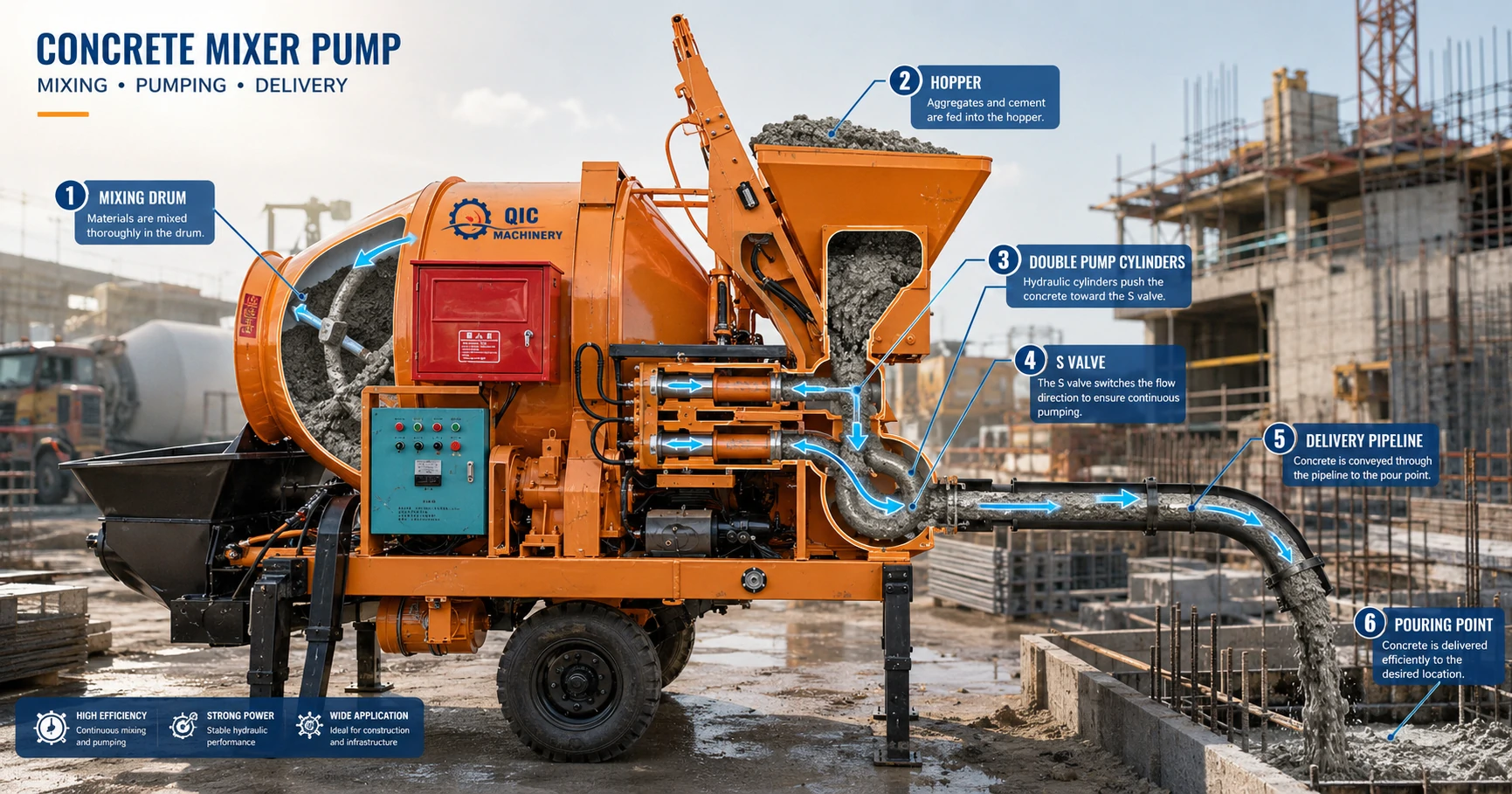
Our trailer-mounted concrete pump capacity range
Our trailer-mounted concrete pump models provide 20, 30, 40, 50, 60 and 80 m³/h. Our electric models provide 15, 20, 20–23, 35–40 and 80 m³/h.
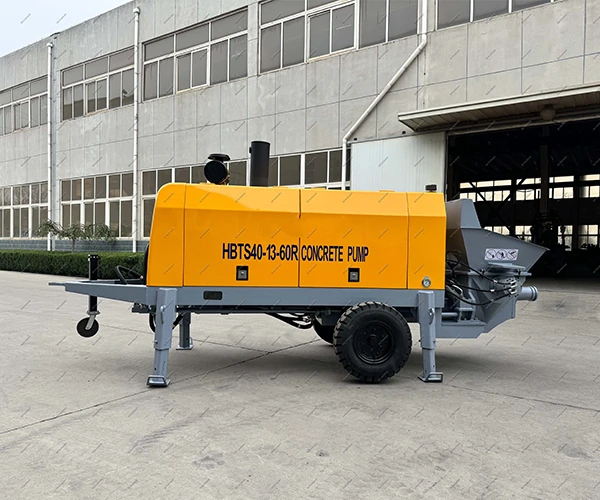
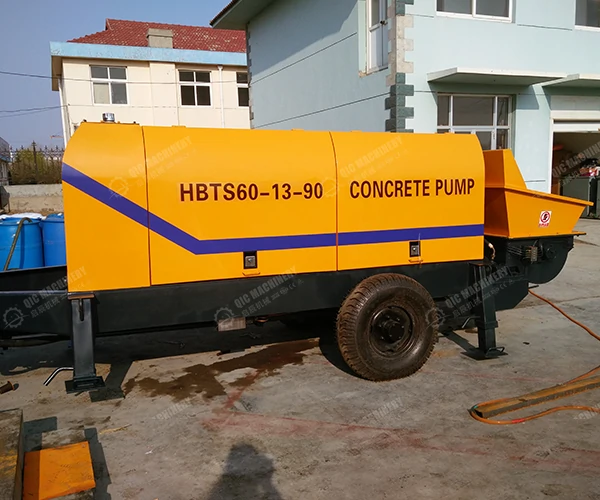
| Diesel model | Output | Reference vertical / horizontal distance | Engine power |
|---|---|---|---|
| HBTS20-08-40R | 20 m³/h | 120/300 m | 39.6 kW |
| HBTS30-10-48R | 30 m³/h | 120/350 m | 48 kW |
| HBTS40-10-82R | 40 m³/h | 120/500 m | 82 kW |
| HBTS50-13-72R | 50 m³/h | 180/550 m | 72 kW |
| HBTS60-13-105R | 60 m³/h | 150/450 m | 105 kW |
| HBTS80-16-129R | 80 m³/h | 190/800 m | 129 kW |
| Electric model | Output | Maximum pumping pressure | Reference vertical / horizontal distance | Motor power |
|---|---|---|---|---|
| HBTS20-15-22 | 15 m³/h | 15 MPa | 40/100 m | 22 kW |
| HBTS20-20-37 | 20 m³/h | 20 MPa | 70/150 m | 37 kW |
| HBTS40-21-45 | 20–23 m³/h | 21 MPa | 120/250 m | 45 kW |
| HBTS50-30-55 | 35–40 m³/h | 30 MPa | 150/300 m | 55 kW |
| HBTS80-13-90 | 80 m³/h | 13/7.4 MPa | 150/550 m | 90 kW |
Maximum output and maximum reference distance do not necessarily occur at the same time. Pipe diameter, aggregate size, cylinder dimensions and hydraulic conditions also affect the usable output.
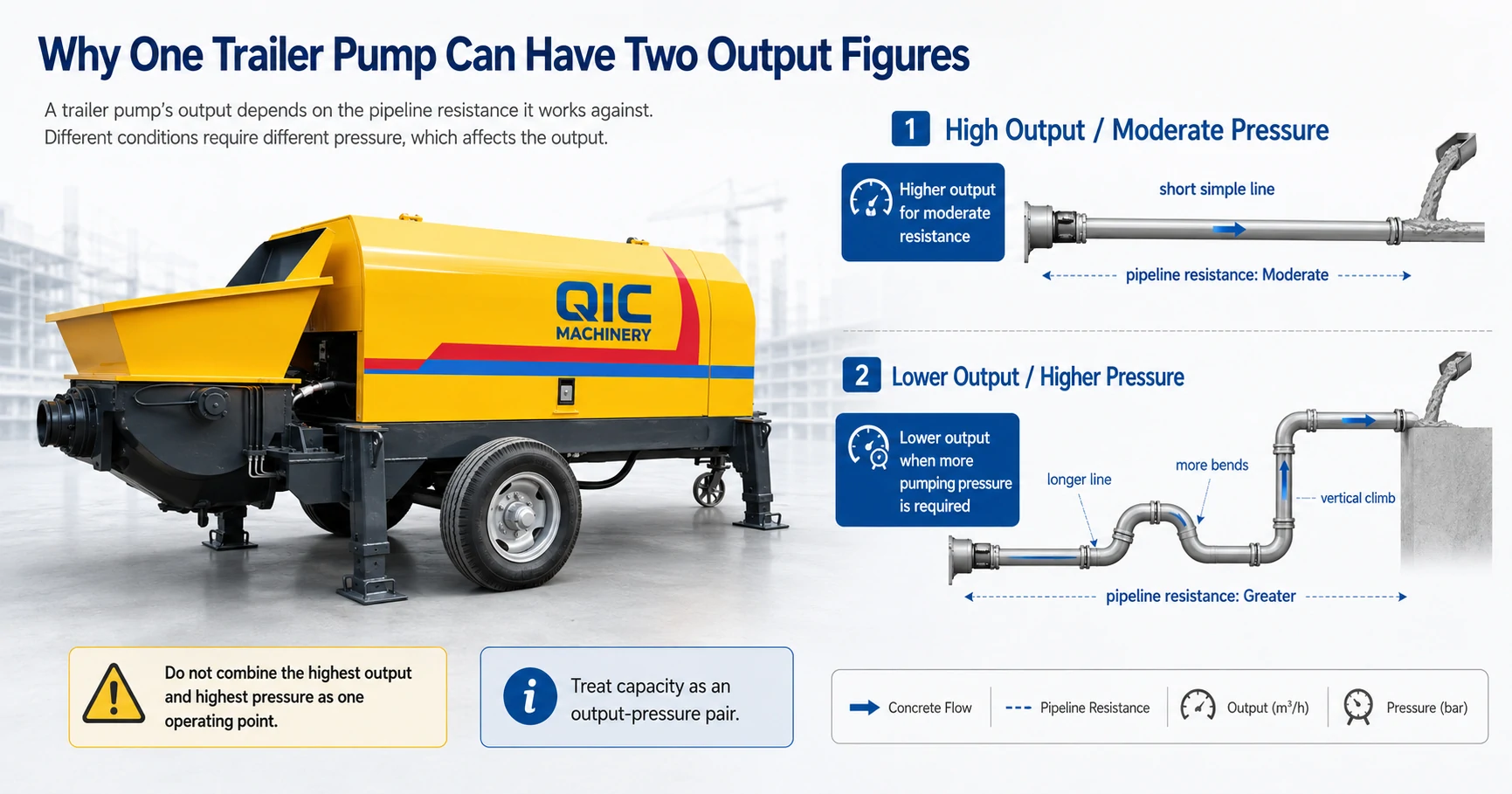
Why one trailer pump can have two output figures
A paired output rating represents two pressure conditions: higher output for moderate resistance and lower output when more pumping pressure is required.
Do not combine two different operating points
For a short, simple line, the higher-output condition may be useful. When the line climbs, extends or turns repeatedly, pressure can become the deciding limit and the lower output figure becomes more relevant.
The largest m³/h figure and the largest pressure figure may belong to different operating conditions. Treat capacity as an output-pressure pair rather than an isolated number.
The pump cannot place concrete faster than the site can feed it
The usable hourly rate is controlled by the slowest stage between concrete production and final placement. An 80 m³/h pump will wait if the batching plant, mixer-truck cycle, hopper feeding or placing team can sustain only a lower rate.
Start with the pour itself: divide the concrete volume by the available placing time to find the required average rate. Compare that figure with the concrete supply plan before selecting the pump’s operating output.
This avoids two opposite consequences. A large pump can spend much of the shift waiting for concrete, while a smaller pump can extend the pour when its usable output falls below the required sustained rate.
Pipeline and concrete conditions change which capacity matters
Height, developed pipe length and concrete properties can move the decision from maximum flow toward pressure. A reference distance in a table is not a stand-alone selection rule.
Vertical lift
More height raises the pressure needed to support and move the concrete column. Omitting it can make the headline output unusable.
Pipe layout
More bends, reducers, hose and smaller pipe increase resistance. The useful operating output can fall as the line becomes harder to pump through.
Aggregate and consistency
Larger or poorly graded aggregate and unsuitable workability can interrupt cylinder filling and pipeline flow. Adding water is not a capacity solution.
Concrete supply
Irregular mixer-truck arrivals leave the hopper waiting. A larger pump then adds unused capacity rather than a faster sustained pour.
Our wider concrete pump options include different placing arrangements, but their capacity ranges should not be merged into this trailer-pump decision.
Diesel or electric changes the operating plan
Choose diesel when stable industrial electricity is unavailable; choose electric only when the site can provide the required voltage, frequency, phase and power capacity. The power source does not replace the output-pressure decision.
Diesel suits remote or temporary work areas because the pump carries its own drive source. Fuel supply, engine maintenance, noise and exhaust then become part of the operating plan.
Electric power can suit a fixed building and housing construction site with dependable industrial supply. If voltage or transformer capacity is inadequate, the motor cannot sustain the intended duty even when the rated output appears suitable.
Select the model from the sustained placing requirement
Begin with the concrete volume and available placing time, then add the complete pipe layout, concrete properties, supply rate and power conditions. These inputs determine the output and pressure the project can sustain.
Send the information that changes the model
- Concrete volume per pour and available placing time.
- Vertical height and developed horizontal pipe length.
- Pipe diameter, bends, reducers and flexible hose length.
- Maximum aggregate size and concrete slump or flow.
- Expected batching and mixer-truck supply rate.
- Diesel conditions or electric voltage, frequency, phase and available power.
Send these details when you contact us. We can select a suitable trailer pump model and prepare the pipeline accessories and power option for the quotation.
Conclusion
Our diesel trailer-mounted concrete pump models provide 20/11–80/45 m³/h, and our electric models provide 15–80 m³/h. The suitable capacity is the output-pressure condition that can sustain your required placing rate through the actual pipeline with continuous concrete supply.