Concrete Batching Plant Components vs Parts
Concrete batching plant components usually mean the main systems that form the complete plant, while concrete batching plant parts may also include spare parts, wear parts, replacement parts, sensors, belts, blades, liners, valves, filters, and electrical accessories.
Configuration Note:If your project is choosing a complete plant, think in full systems first: aggregate storage, weighing, conveying, mixing, powder supply, control, and truck loading. If your project is planning operation after delivery, separate the wear parts, spare parts, and replacement parts from the main equipment scope.
| Term | What It Usually Means | How Your Project Should Use It |
|---|---|---|
| Concrete batching plant components | Main plant systems such as aggregate batching, cement storage, conveying, weighing, mixing, and control. | Use this when comparing a complete plant quotation, model configuration, site layout, and installation plan. |
| Concrete batching plant parts | Main components plus spare parts, wear parts, and replacement parts used for operation and maintenance. | Use this when preparing quotation details, spare parts planning, maintenance access, and after-delivery support. |
| Concrete batch plant parts | A shorter search phrase often used when looking for batch plant systems or replacement parts. | Use this as a spoken search variant, while still comparing the full plant by system. |
Main Concrete Batching Plant Components
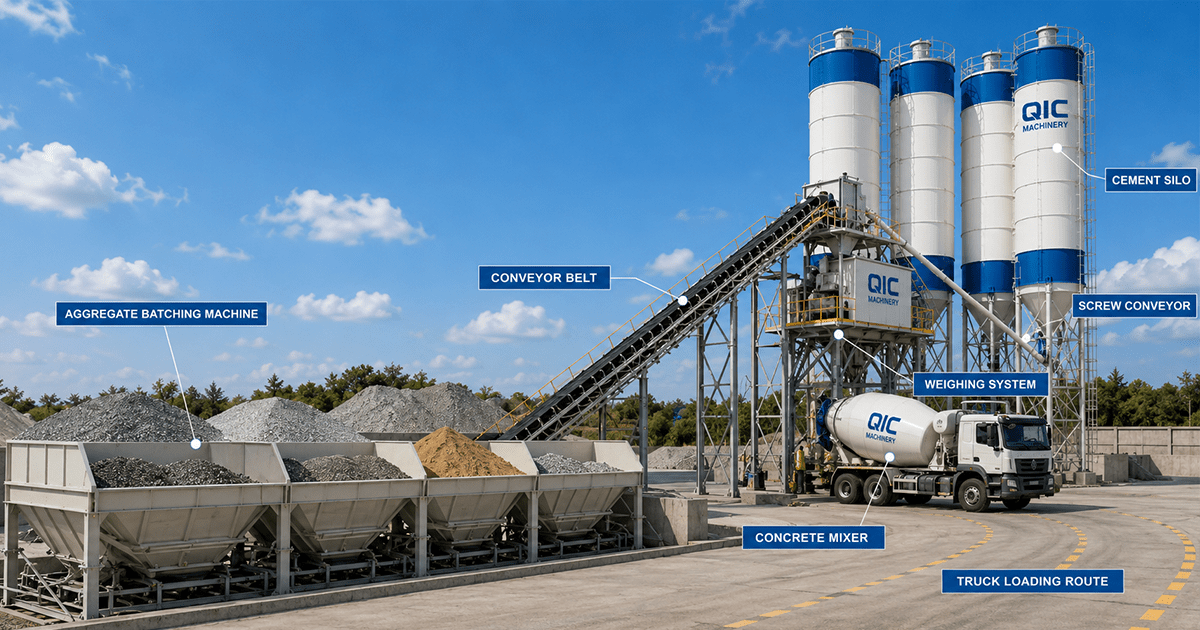
The main components of a concrete batching plant can be grouped into aggregate batching, cement storage, powder conveying, weighing, mixing, control, dust removal, pneumatic operation, and truck loading systems.
Aggregate SystemControls aggregate storage, batching accuracy, and feeding rhythm.
Mixing SystemAffects concrete consistency, batch cycle, discharge speed, and maintenance.
Powder SystemConnects cement silo, screw conveyor, powder weighing, and dust control.
Control SystemCoordinates batching sequence, alarms, production data, and automation.
| Component | Main Function | What It Affects | What To Confirm Before Quotation |
|---|---|---|---|
| Aggregate Batching Machine | Stores and weighs sand, stone, gravel, or other aggregates before conveying. | Batching accuracy, aggregate storage volume, feeding speed, and plant capacity. | Aggregate type, aggregate size, number of bins, loading method, and required output. |
| Concrete Mixer | Mixes aggregates, cement, water, and additives in wet or central mix configurations. | Concrete consistency, mixing cycle, discharge speed, maintenance access, and power demand. | Concrete application, mixer model, batch volume, aggregate size, and quality control requirement. |
| Cement Silo | Stores cement, fly ash, or other powder materials. | Powder storage capacity, plant height, layout, delivery preparation, and silo quantity. | Cement demand, powder type, silo capacity, site height limit, and destination country. |
| Screw Conveyor | Transfers cement or powder from the silo to the weighing system. | Powder feeding speed, sealing, layout angle, and weighing rhythm. | Conveyor length, diameter, silo position, powder type, and installation angle. |
| Weighing System | Measures aggregates, cement, water, and additives according to the mix design. | Batching accuracy, concrete consistency, quality control, and production repeatability. | Material categories, weighing accuracy needs, sensor configuration, and calibration plan. |
| Control System | Controls batching sequence, weighing, mixing, discharge, alarms, and production data. | Automation level, operation efficiency, fault response, and production management. | Manual or automatic control need, voltage, language, operator skill, and reporting requirements. |
Components and Their Impact on Quotation
A concrete batching plant quotation depends on component size, system quantity, automation level, supporting equipment, shipping method, installation expectation, and spare parts scope.
Before Comparing Prices:Do not compare plant quotations only by model name. Mixer size, silo quantity, control system, conveyor route, installation scope, and spare parts package can all change the final configuration.
| Quotation Factor | Component Connection | Why It Changes the Final Scope |
|---|---|---|
| Capacity target | Mixer size, aggregate batching machine, weighing system, and conveying system. | Higher output usually requires stronger batching, feeding, mixing, and discharge coordination. |
| Powder storage | Cement silo, screw conveyor, dust collector, and powder weighing system. | Silo quantity and conveyor matching affect layout, shipping, installation, and storage plan. |
| Automation level | Control system, sensors, electrical cabinet, software, and monitoring functions. | Higher automation may reduce manual operation but changes electrical and control requirements. |
| Spare parts scope | Mixer blades, liners, belts, rollers, sensors, valves, filters, and seals. | Spare parts planning affects maintenance preparation and after-delivery service communication. |
If your project is comparing budget ranges, use the concrete batching plant cost guide together with the component list, so each quotation is understood by configuration instead of product name only.
Components and Their Impact on Capacity
Concrete batching plant capacity depends on the coordination of batching, conveying, weighing, mixing, discharge, truck loading, and control rhythm.
A higher-capacity plant does not depend on the mixer alone. Aggregate feeding speed, cement conveying speed, weighing cycle, mixer discharge time, truck access, and control sequence all affect practical output.
- Aggregate batching machine: affects how quickly aggregates are stored, measured, and supplied.
- Conveying system: affects material transfer speed and layout efficiency.
- Concrete mixer: affects batch volume, mixing time, discharge speed, and concrete consistency.
- Cement silo and screw conveyor: affect powder feeding stability and weighing cycle.
- Control system: affects batching sequence, automation, alarms, and production repeatability.
If your output target is still unclear, this concrete batching plant capacity guide can help your project estimate daily demand and working hours before confirming the component configuration.
Core System 1: Aggregate Batching Machine
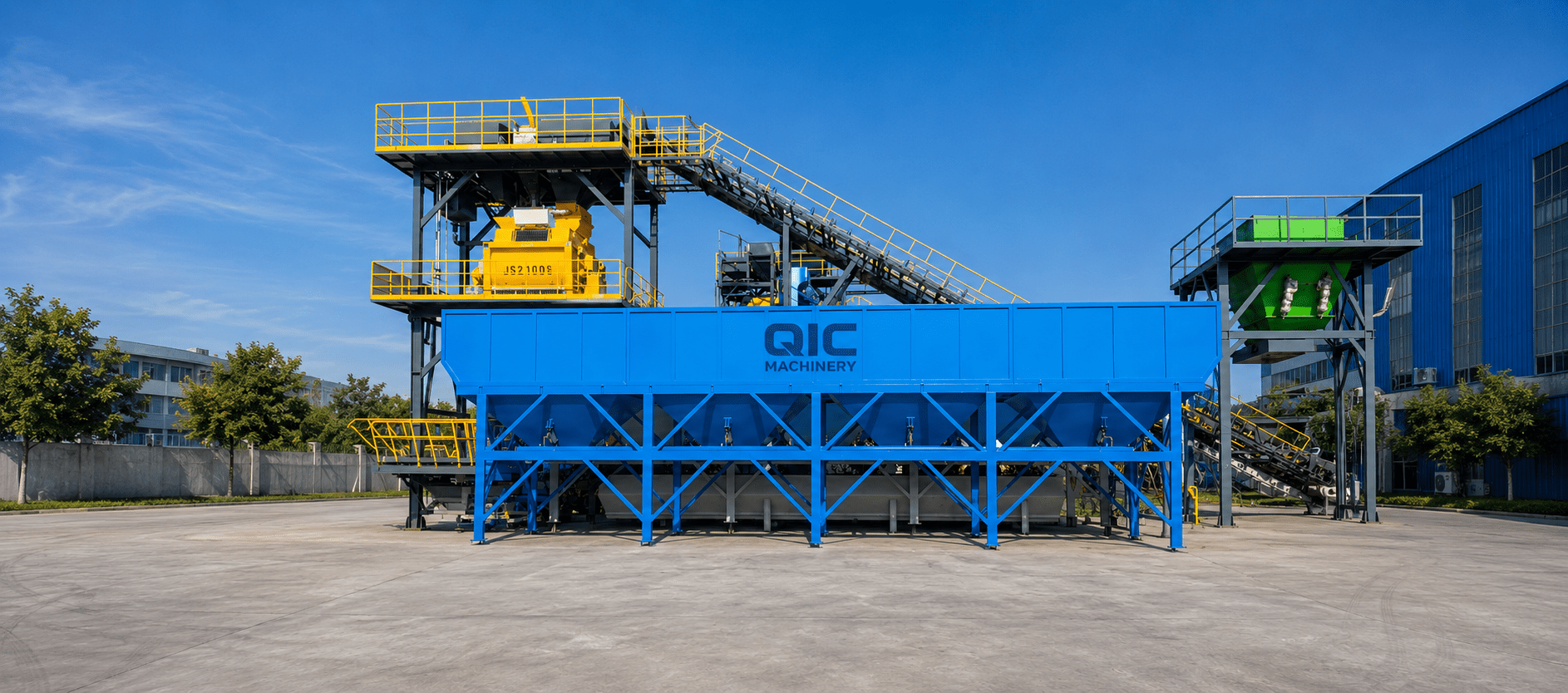
The aggregate batching machine is the starting point for material proportioning because it stores and weighs sand, stone, gravel, or other aggregates before they enter the conveying and mixing route.
Your project should confirm the number of aggregate bins, aggregate type, aggregate size, feeding method, weighing method, and loading equipment before choosing the aggregate batching machine.
Project Planning Note:If your project uses several aggregate sizes, confirm bin quantity and loading direction before deciding mixer capacity. Aggregate supply often decides whether the plant can keep a stable production rhythm.
Core System 2: Concrete Mixer
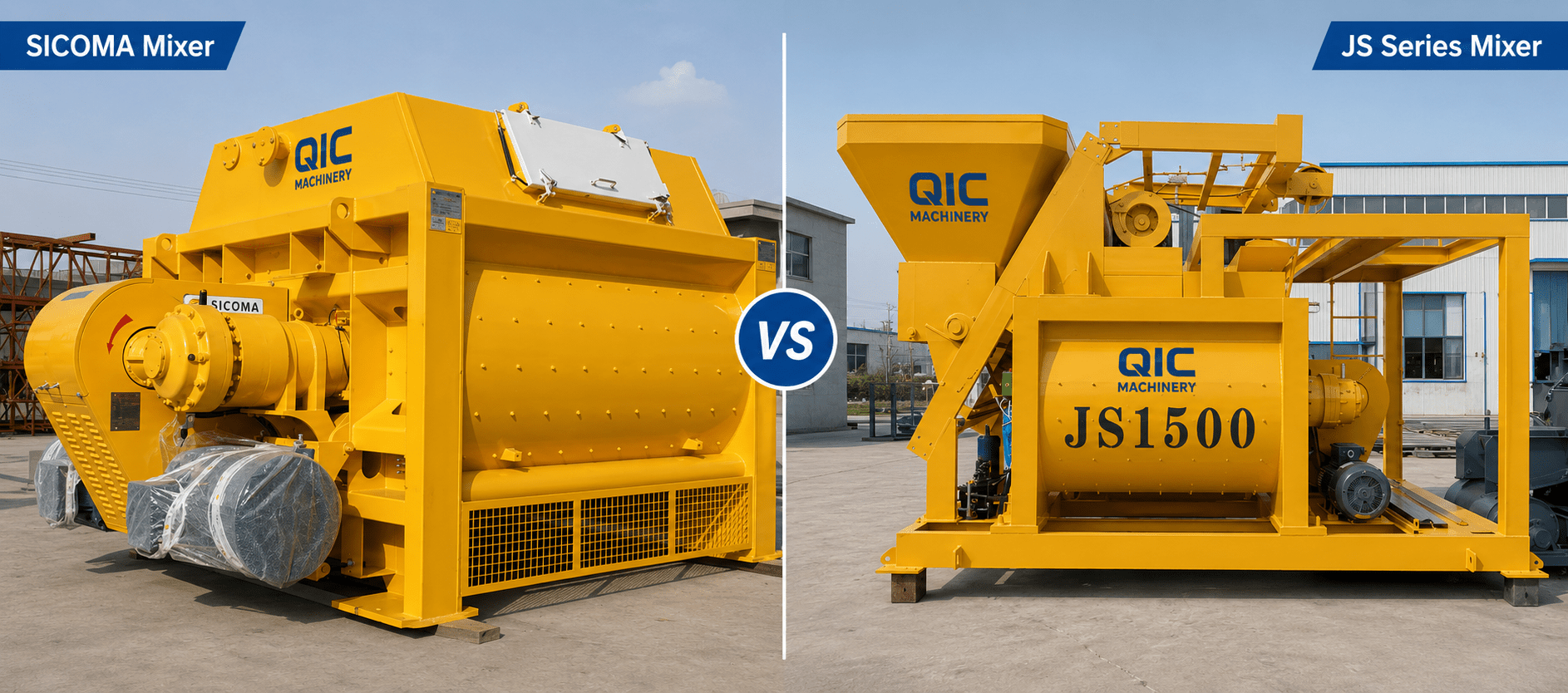
The concrete mixer is the central mixing component for wet mix or central mix batching plants, but not every plant type uses a central mixer in the same way.
For a standard wet or stationary plant, the concrete mixer affects batch volume, mixing quality, discharge time, wear parts, and maintenance access. Your mixer choice should match aggregate size, concrete application, expected consistency, power supply, and daily output.
For a dry mix plant, final mixing usually happens in the concrete mixer truck instead of a central mixer. If your project is comparing equipment routes, use the types of concrete batching plants guide to decide whether truck mixing or plant-side mixing is more suitable.
Core System 3: Cement Silo and Screw Conveyor
The cement silo and screw conveyor form the powder storage and conveying route for cement, fly ash, or other powder materials.
A cement silo affects storage capacity, plant height, installation work, foundation planning, loading access, and shipping preparation. The silo plan should match cement consumption, powder types, silo quantity, silo capacity, site height limit, and destination country.
A screw conveyor affects powder transfer speed, sealing, installation angle, weighing rhythm, and layout distance between silo and weighing system. Conveyor length and angle should not be selected separately from the silo position and plant layout.

Core System 4: Weighing and Control System
The weighing and control system determines how materials are measured, sequenced, adjusted, and documented during batching.
Accurate weighing helps the plant keep concrete consistency across different batches. The control system coordinates aggregate feeding, cement conveying, water dosing, additive dosing, mixer operation, discharge, alarms, and production data.
Automation Planning Note:Before confirming the control system, define the required automation level, operator experience, voltage, language interface, production data needs, and after-delivery service communication expectations.

Optional Systems and Spare Parts Planning
Concrete batching plant parts may also refer to optional systems, wear parts, spare parts, and replacement parts that support operation and maintenance after delivery.
Common spare or wear parts may include mixer blades, liners, seals, belts, rollers, sensors, valves, filters, air pipes, electrical components, and dust collector parts. The spare parts list should match your plant type, mixer model, working intensity, material abrasiveness, and maintenance plan.
Wear PartsMixer blades, liners, belts, rollers, and seals should match working intensity and aggregate abrasiveness.
Electrical PartsSensors, switches, cables, and control elements should match voltage and automation requirements.
Air and Dust PartsValves, filters, air pipes, and dust collector parts should match silo and pneumatic system design.
Do not treat every spare parts list as universal. A stationary plant, mobile plant, foundation-free plant, dry mix plant, and drum-type mobile plant may need different spare parts planning.
What Information Should You Prepare Before a Component Proposal?
A component proposal becomes much clearer when your project provides output, material, site, power, installation, and spare parts information together.
Before Quotation:Prepare your required output, concrete application, aggregate size, cement silo plan, power supply, site layout, installation expectation, spare parts requirement, destination country, and project schedule.
| Information To Prepare | Why It Matters for Components |
|---|---|
| Required concrete output | Helps match mixer size, aggregate batching capacity, weighing cycle, and conveying route. |
| Concrete application | Road, bridge, housing, commercial concrete, and precast use may need different component focus. |
| Aggregate type and size | Affects batching bin design, mixer matching, wear parts, and conveying method. |
| Cement and powder material plan | Affects cement silo quantity, screw conveyor matching, powder weighing, and dust collection. |
| Site layout and available land | Affects aggregate loading direction, silo placement, conveyor route, truck loading, and installation sequence. |
| Power supply | Affects motor configuration, control cabinet, automation system, and installation preparation. |
| Spare parts expectation | Helps plan wear parts, maintenance items, and after-delivery service communication. |
QIC Machinery Support for Component Selection
QIC Machinery supports your concrete batching plant component selection by matching required output, concrete application, aggregate condition, site layout, power supply, equipment type, installation expectation, destination country, and spare parts requirement.
With over 30 years of production and sales experience, a 25,000m3 manufacturing facility, more than 300 successful projects, and equipment supplied to more than 100 countries and regions, QIC Machinery can help your project turn a component list into a workable equipment route, from production preparation and shipping coordination to installation guidance, spare parts planning, and after-delivery service communication.
For project proof and factory reference, you can see concrete batching plant cases and factory videos and delivery records. QIC Machinery can also provide factory visit references, production preparation photos, packing photos, container loading records, and delivery communication according to your project requirements.

Conclusion: Plan Components Before Comparing Plant Prices
Concrete batching plant components directly affect quotation scope, production capacity, site layout, installation preparation, shipping coordination, and long-term maintenance. Before comparing plant prices, your project should understand how the aggregate batching machine, concrete mixer, cement silo, screw conveyor, weighing system, control system, conveying system, optional systems, and spare parts work together.
The best component configuration depends on your required output, material condition, concrete application, site layout, power supply, installation plan, spare parts expectation, and destination country. To prepare a suitable configuration, contact QIC Machinery with your project details and expected schedule.