What Is a Concrete Batching Plant?
A concrete batching plant is a production system that measures aggregates, cement, water, and additives according to a concrete mix design. Depending on the plant type, the final mixing can happen inside a central mixer or inside a concrete mixer truck.
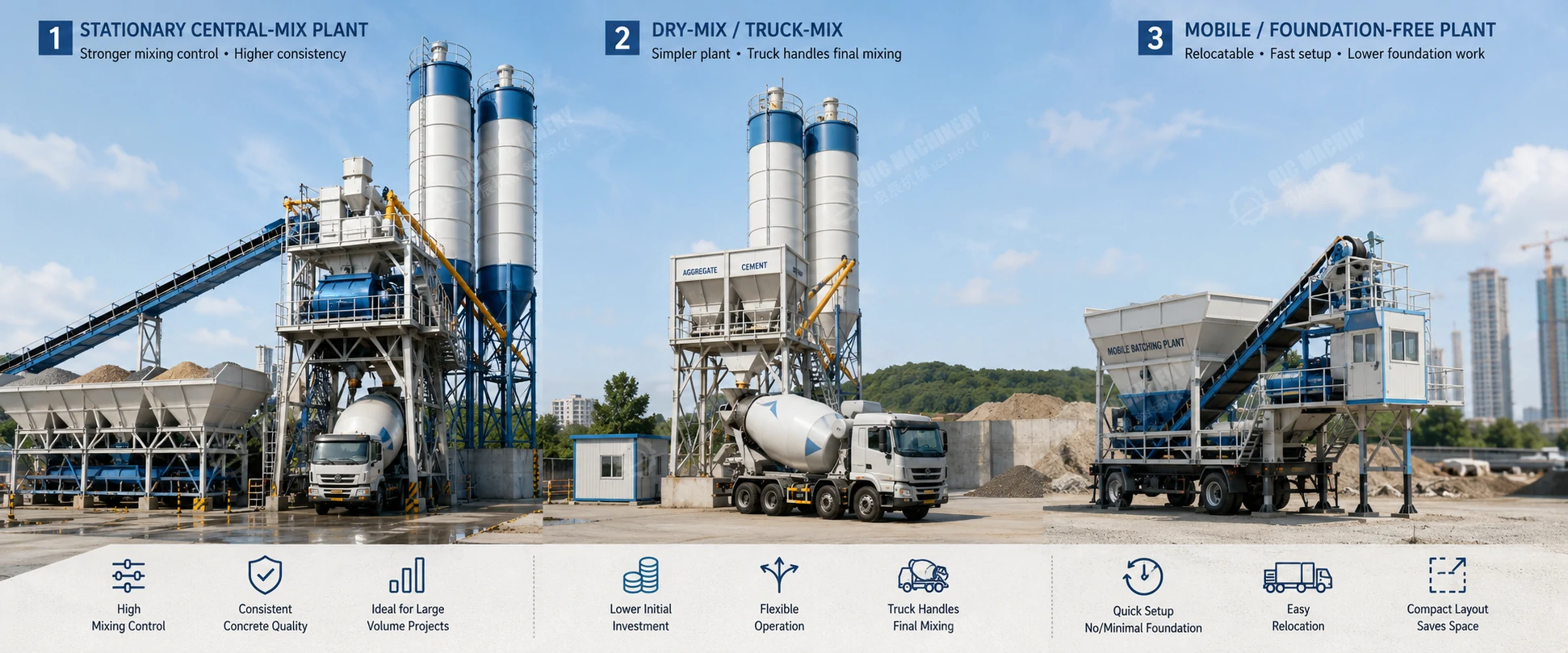
That difference matters. A central mix plant gives stronger plant-side control over mixing time and concrete consistency. A dry mix plant has a simpler plant structure and sends measured materials into the truck, where the final mixing happens in the drum.
In practical equipment selection, the plant should match your output demand, concrete application, site layout, raw material condition, power supply, truck route, and installation expectation.
Material route
Aggregates, cement, water, and additives must reach the weighing system smoothly.
Mixing route
Final mixing can happen in a plant mixer or inside a concrete mixer truck.
Delivery route
Truck access, loading rhythm, and delivery distance affect daily concrete output.

Concrete Batching Plant Working Process
The concrete batching plant process usually follows a clear route: store materials, feed aggregates, transfer cement or powder, weigh each material, mix or load the batch, and control the operation through the plant control system.
Process at a glance:
1. Store
Aggregates and powder materials are prepared.
2. Weigh
Each material is measured by the mix design.
3. Convey
Belts and screw conveyors move the materials.
4. Mix
The batch is mixed in the plant or truck.
5. Discharge
Concrete or measured materials are loaded for delivery.
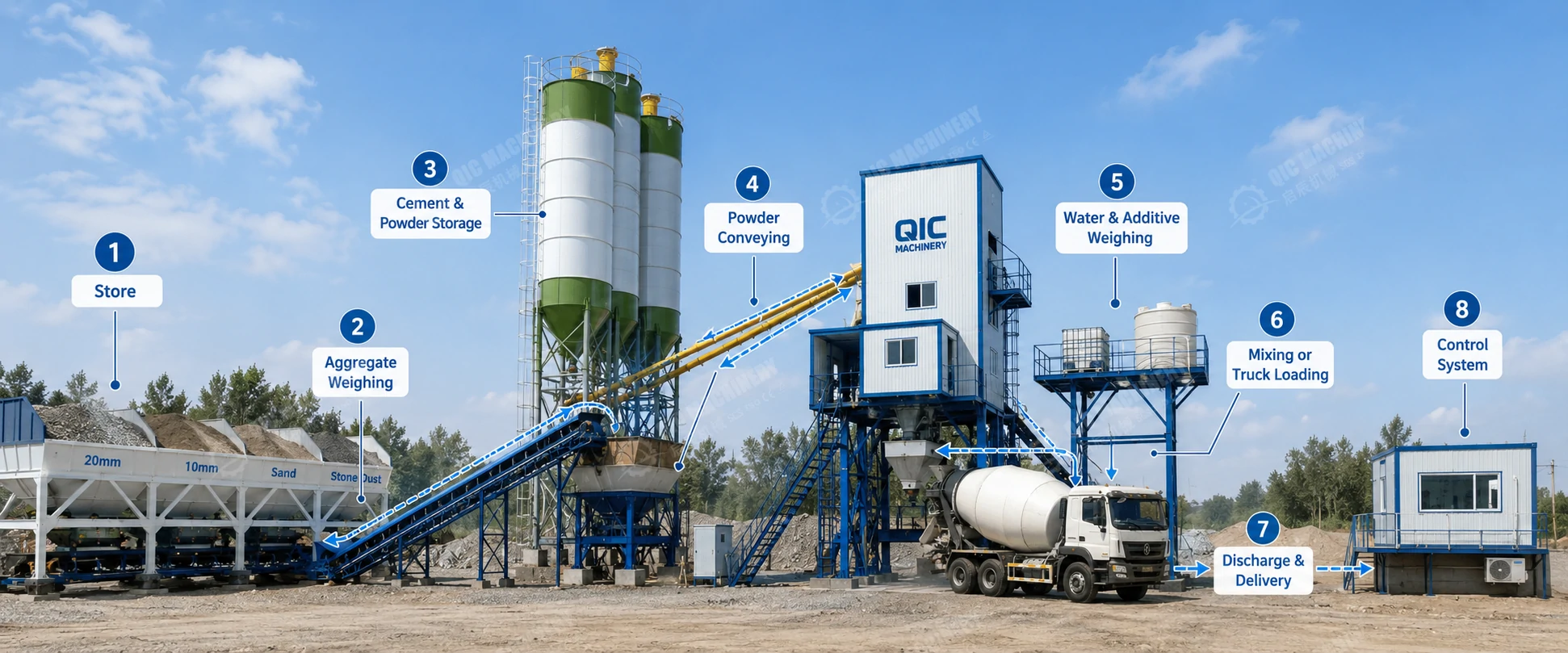
| Process Step | What Happens | Why It Matters For Your Project |
|---|---|---|
| 1. Aggregate storage | Sand, gravel, and crushed stone are stored in aggregate bins or stockpile feeding systems. | Aggregate size, moisture, and feeding stability affect batching accuracy and concrete output. |
| 2. Aggregate weighing | The aggregate batching machine weighs each aggregate size according to the mix design. | Accurate aggregate proportion helps avoid strength, slump, and consistency problems. |
| 3. Cement and powder storage | Cement, fly ash, or other powder materials are stored in a cement silo. | Silo capacity, powder type, and unloading method affect continuous production and site preparation. |
| 4. Powder conveying | A screw conveyor transfers cement or powder from the silo to the weighing hopper. | Conveying distance, sealing, and powder flow affect production rhythm and dust control. |
| 5. Water and additive weighing | Water and admixtures are measured by separate weighing or metering systems. | Water control is critical for slump, workability, and concrete performance. |
| 6. Mixing or truck loading | Materials either enter a central concrete mixer or discharge into a concrete mixer truck. | This step decides whether your project uses a central mix route or a dry mix / truck mix route. |
| 7. Discharge and delivery | The finished concrete or measured batch is discharged into a truck for delivery or site use. | Truck number, loading speed, transport distance, and delivery rhythm affect daily output. |
| 8. Control system operation | The control system manages weighing, batching sequence, mixing time, discharge, alarms, and production records. | Automation helps your plant keep recipes organized and reduce manual operation mistakes. |
Dry Mix vs Central Mix Working Route
The biggest process difference is where the final mixing happens. A central mix concrete batching plant completes mixing inside the plant mixer. A dry mix concrete batching plant weighs and loads dry materials into the mixer truck, and the truck drum completes the final mixing.
Decision note:
Do not choose dry mix or central mix only by price. The better route depends on concrete consistency requirements, truck availability, transport distance, water-control method, and how much mixing control your project wants to keep inside the plant.
| Working Route | How It Works | Best Fit | Key Attention Point |
|---|---|---|---|
| Central mix plant | Aggregates, cement, water, and additives are weighed and mixed inside the plant mixer before truck loading. | Commercial concrete supply, infrastructure work, repeated mix designs, and higher consistency requirements. | Mixer model, mixing time, discharge speed, power supply, and maintenance access. |
| Dry mix / truck mix plant | Dry materials are weighed and discharged into a mixer truck. Water is added according to the production route, and the truck drum completes mixing. | Projects that prefer simpler plant structure, lower plant-side equipment investment, and truck-based delivery. | Truck drum condition, mixing time, water control, transport distance, and concrete consistency management. |
| Mobile batching route | The batching system is arranged on a movable structure for projects that may relocate or need faster site setup. | Temporary construction sites, contractors with multiple project locations, and site-based production. | Site access, foundation preparation, relocation plan, and equipment transport route. |

If your project is comparing plant types, the working route should be matched with the project goal. A stationary concrete batching plant is usually chosen for longer-term production, while a mobile concrete batching plant is more suitable when relocation or faster site setup is important. If your project prefers truck-based mixing, a dry mix concrete batching plant may be the better route.
How the Working Process Affects Equipment Selection
The working process affects plant selection because every step adds a practical project condition. A site with limited space may need a compact layout. A project with strict concrete consistency may need stronger plant-side mixing control. A project with frequent relocation may need a mobile or foundation-free structure.
When central mixing is usually stronger
Central mixing gives your project more control over mixing time before the concrete leaves the plant. This is useful when concrete quality, repeated recipes, commercial supply standards, or higher output stability are important.
When dry mix can be practical
Dry mix can be practical when your project wants a simpler plant structure and already has suitable mixer trucks. The important point is that truck mixing must be managed carefully, especially water addition, drum speed, mixing time, and delivery distance.
When mobile or foundation-free structure matters
If your project moves between sites or wants to reduce civil foundation work, the equipment structure becomes part of the working process. In this case, layout, lifting points, transport width, installation sequence, and truck access should be considered before model selection.
For more configuration details, your project can also use the concrete batching plant components guide together with this process guide.
What Information Should Your Project Prepare?
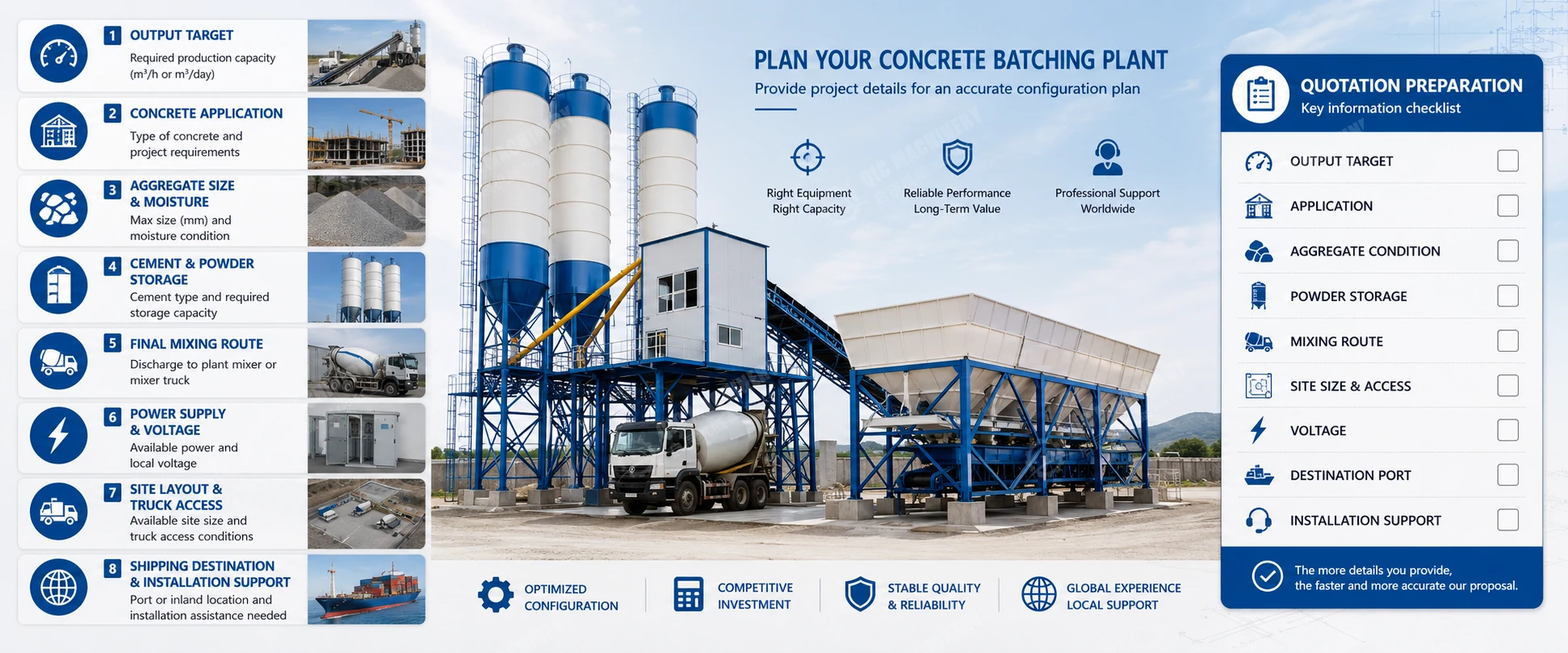
Before requesting a configuration plan, your project should prepare the information that directly affects the batching process. This helps the plant route match your real operating conditions instead of being chosen only by product name.
- Required hourly or daily concrete output
- Concrete application, such as building work, road construction, commercial supply, or precast production
- Aggregate sizes, sand condition, and raw material moisture
- Cement, fly ash, or powder storage needs
- Whether final mixing should happen in a plant mixer or mixer truck
- Power supply and voltage conditions
- Site layout, available installation area, truck access, and foundation plan
- Shipping destination, container loading expectation, and installation support needs
These details also help your project understand the quotation scope. A plant may include batching machine, cement silo, screw conveyor, mixer, control system, water and additive systems, conveyor structure, weighing systems, and optional dust-control or storage equipment. For budget planning, the concrete batching plant cost guide can be read together with this process article.
Quotation preparation box:
The fastest way to narrow the configuration is to prepare output target, concrete application, aggregate condition, powder storage needs, final mixing route, site size, voltage, destination port, and expected installation support.
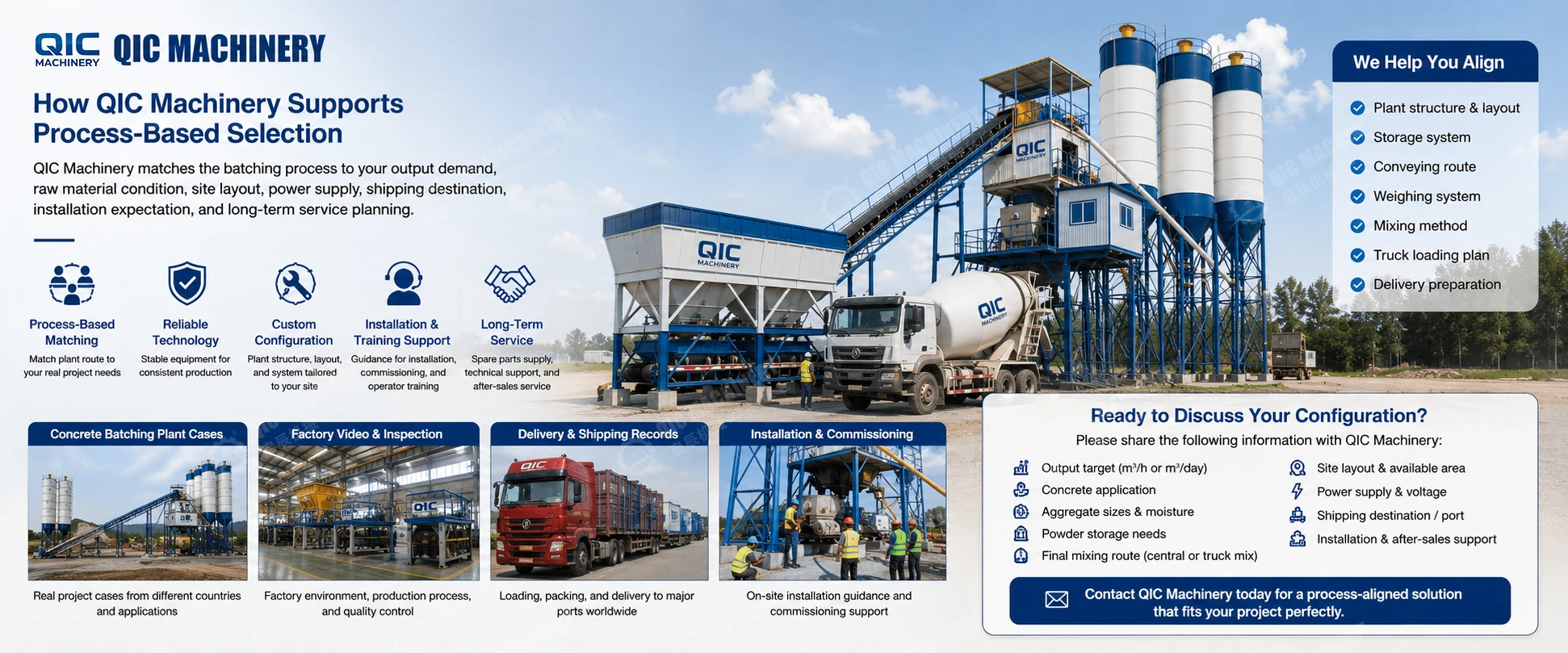
How QIC Machinery Supports Process-Based Selection
QIC Machinery supports your project by matching the batching process to output demand, raw material condition, site layout, power supply, shipping destination, installation expectation, and long-term service planning.
Instead of choosing only by model name, your project can compare whether the practical route should be stationary, mobile, foundation-free, dry mix, or central mix. QIC Machinery can help align the plant structure, storage system, conveying route, weighing system, mixing method, truck loading plan, and delivery preparation.
For project proof, you can view concrete batching plant cases and factory videos and delivery records. If your project is ready to discuss a configuration, you can contact QIC Machinery with your output target, site conditions, material details, and shipping destination.
Conclusion: Understand the Process Before Choosing the Plant
A concrete batching plant works by controlling material storage, weighing, conveying, mixing, and truck loading as one production route. Once your project understands this route, it becomes easier to choose between stationary, mobile, foundation-free, dry mix, and central mix equipment.
The right process should match your concrete output, raw materials, site layout, truck coordination, mixing control, shipping plan, and installation expectation. When those details are clear, QIC Machinery can help your project prepare a more practical configuration plan.